By Robert G. Henry, DMD, MPH
Director for Geriatric Dental Services and General Practice Residency
Department of Veterans Affairs Medical Center
Associate, Sanders Brown Research Center on Aging
University of Kentucky, Lexington, Kentucky
Notes from the Editor
This prescient article by an outstanding young leader in dentistry for the older adult paints an exciting, albeit realistic picture of the promises and challenges of dental science in the fast approaching 21st century. In our opinion, if we are to translate the potential for preventive dentistry into reality we shall have to fulfill two essential prerequisites: first, that protectoral and postgraduate dental education must emphasize the utilization of fluorides and other recent therapies for adults and geriatric persons; and second that the politics of public health dentistry must enable and improve access to concepts of prevention across the age spectrum. Unfortunately, as we go to press, even the minimalist approach to preventive dental care for children is now in legislative limbo. Perhaps this will give our profession a little more time to convince our representatives that there are compelling advantages, healthwise and economically, in expanding the benefits of modern dental science to the young and to the vast population of elderly and disabled patients as well. Thus dental professionals could look forward more optimistically to the realization of one of the goals of the National Institute of Health_Oral Health 2000_the eradication of dental caries and a significant reduction in the rate of edentulousness in the U.S. population by the end of this century.
Saul Kamen, DDS
Series Editor, Focus on Adult Oral Health
Introduction
Have you noticed that more and more of your patients are in the adult and older age group? And aren't you just a little pleasantly surprised that many of them present with a fairly intact dentition, in comparison with the large number of edentulous or partially edentulous elders you treated a decade or so ago? It seems we are finally reaping the benefits of the preventive program initiated a halfcentury ago in the early 1940s, when dentists and allied public health professionals recognized that fluorides could reduce the amount and severity of dental caries. Those pioneers knew even then that prevention is the key to retention, and today the oral health of our society is considered better than at any time in history, with decreasing tooth loss and substantially fewer caries seen in children. It is clear this trend has impacted significantly on current dental practice and it seems the concept of prevention will have long ranging effects on oral rehabilitation in the next century. This paper will review the demographic imperatives of aging with projections for the future which make dental care for older adults a critical issue for our profession. It will delineate the changing epidemiology of dental diseases in this patient population, and focus on preventive approaches to be taken now and in the years ahead.
Demographics
It is widely accepted that dentists are treating more older patients than ever before.1 This trend can be explained by several factors. First, the absolute and relative increase of people over 65 years of age has grown and is projected to continue to grow in the future. In 1900 there were only 3 million individuals age 65 or older representing 4.0% of the population. By 1990, this number had grown to 31.5 million individuals over age 65, representing 12.6% of the population. By the year 2030, the projected numbers of Americans aged 65 and above will be 65.6 million, representing 21.8% of the population. l Therefore, there are simply more older adults available to dentists as dental patients.
Secondly, older adults are going to the dentist more than at any time in history. In 1983, the average number of dental visits per older adult per year was only 1.5, the lowest for any reported age group.2 The National Center for Health Statistics (NCHS) reported that between 1983 and 1989, however, there was a 30% increase in dental visits by those aged 65 and older.3
Finally, more older patients are being treated by dentists today because they have kept their natural teeth over their lifetime. Indeed, the percentage of dentate older adults going to the dentist was the same as dentate younger Americans (aged 3544) according to the NCHS study.3
As an indicator of a population's oral health, it is noteworthy that total edentulism has decreased in the elderly from more than 60% in 1957 to about 41% in 1986.4 Correlating dental status with differing age cohorts, the National Institute for Dental Research reported that in 19851986, older Americans aged 6569 retained an average of 18.1 teeth; the number of teeth retained dropped to 16.8 for those aged 6975, and to 15.1 for those aged 80 and older.5 In a recent report, edentulism in the age group 5564 declined from around 30 percent to just under 15%.6 In addition, partial tooth loss among dentate adults also improved, with the dentate population retaining 1.7 more teeth in 19851986, compared to the early 1970s.
Tooth retention in the older adult (65+) has made a profound difference in the decision to seek continuing dental care. Among edentulous persons older than age 65, only 13% had visited the dentist in the past twelve months. Furthermore, the majority of edentulous older adults (62.2%) had not been to a dentist for at least three years.7 Since older adults who are dentate use dental services similar to younger adults, it seems the differences in dental utilization which in the past were attributed to aging, are more likely due to the presence or absence of functioning natural dentition. In fact, it has been shown that the value older adults place on dental care is the most important factor influencing dental utilization, including the ability to pay. 8
Finally, the demand for dental care by older adults will increase as a result of the personal dental use habits established during their earlier working years.9 In a survey of general dental practitioners from five states, about onefourth (24.89%) of all dental visits and almost onethird (27.37%) of practice income came from patients over age 60.10 As the relationship between regular dental visits and retention of teeth continues, dentists can expect that older adults will continue to be consumers of dental care during their retirement years.
Aging and Diversity
Before discussing the oral health problems and preventive strategies in older adults, it is important to point out that this population is extremely heterogeneous, representing greater diversity than among their younger cohorts. Ettinger and Beck describe two groups, the institutionalized and homebound elderly patient, as being frail, functionally dependent, or both.11 While these two groups represent truly "geriatric" patients requiring modification of treatment plans as well as special preventive considerations, there are many other subgroups which can be described as well: the "youngold" (6574), "the old-old" (7584), and the "oldest old" (85+); the healthy, the sick, the mentally and physically challenged, the ambulatory, the chairbound, housebound or institutionbound, and the economically advantaged and disadvantaged.12
In considering the oral condition and health of the elderly, preventive strategies, and future implications, this tremendous diversity must be kept in mind. It is perhaps more appropriate to discuss the dental needs and preventive approaches of older adults in terms of their health and functional status, rather than by their age. In addition, it must be remembered that health status is a dynamic quality, so individuals may be "independent" at one point in time, and then become frail or functionally dependent after suffering an acute ailment or the exacerbation of a chronic condition. And, likewise, elders can recover from acute illnesses and regain their independence. 13
To further illustrate this diversity, the trend toward tooth retention provides a good example. As mentioned earlier, more older adults are keeping their natural teeth throughout their lives. However in certain older populations, i.e., those below the poverty level and with less education, a higher prevalence of edentulousness and fewer natural teeth are seen compared to older adults from middle and upper socioeconomic groups. 14 Similarly, those elderly in lower socioeconomic groups are also more likely to have medical and health problems, less likely to practice preventive health, and more likely to have financial barriers to receiving dental care. 15 Therefore, one must look at the encouraging projections for the future with some degree of circumspection. Gift predicts that 40% of older adults in the United States will fall into a "specialneeds" category because of their health status or due to physical and economic barriers which limit their access to care.15
Prevention: The Key to Retention
Dental Caries
One result of the increased retention of natural teeth by older adults is an increased vulnerability to dental diseases over the course of a lifetime. In the past, dental caries was considered a childhood disease because nearly all susceptible tooth surfaces usually were attacked by adulthood.l6 With younger people now reaching adulthood with most teeth cariesfree, the carious attack is spreading out more throughout life.l7 According to Reinhardt and Douglass there will be a twofold increase between 1972 and 2030 in the number of teeth subject to caries and requiring operative dentistry services.18
The majority of coronal dental caries seen in older adults are secondary or recurrent caries, resulting from marginal breakdown or other failure of the restorative material. Beck et al. 19 validated these findings in a study of community dwelling older adults in Iowa. In their study they found 87.9% of dentate subjects had at least one coronal restoration, and approximately 50% had recurrent or incipient caries. Thus, geriatric restorative therapy has been called "recycle dentistry" by such authorities as Omar Reed.20
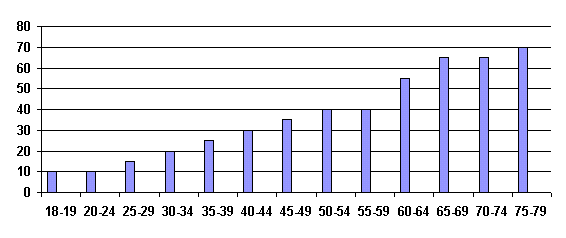
Root caries is a condition which, by definition, begins on cemental surfaces of the tooth root below the enamel margin. Figure 1 shows the percent of persons with at least one carious or filled root surface lesion, based on data from the 198586 National Institute for Dental Research (NIDR) survey. Beck estimated the annual incidence among older noninstitutionalized Americans to be approximately 1.6 per 100 surfaces at risk.21 It is not yet clear whether the data shown here represent a cohort pattern, or whether the younger age groups will look like the present older cohorts in the future. However, what has been shown is that the prevalence of root surface caries increases dramatically among institutionalized or chronicallyill individuals (up to 90% prevalence). The increased prevalence is felt to be attributed to the increase in number or severity of risk factors, including loss of periodontal attachment, increased use of xerostomic medications, poor oral hygiene levels, and lack of access to preventive or dental services available to this population.
|
Percent Affected
Age Group Figure 1. Percent of employed U.S. adults and seniors with at least one carious or filled root surface lesion - 1985 - 1986. (National Institute for Dental Research survey) |
Periodontal Disease
Periodontal diseases are also widespread in the older age groups. The NIDR survey of a noninstitutionalized population of seniors found that more than 95% of those over age 65 had at least 2 mm or more loss of periodontal attachment (LPA); the average loss was nearly 3.2 mm per tooth. In addition, approximately 90% of the seniors surveyed displayed gingival recession of greater than 1 mm (averaging 2 mm per tooth) with more than 40% of the sites affected. The percent of sites with bleeding gingiva increased from 5.8% in the 1864 age groups, to 10.3% in the 6579 age group, to 21.0% in the 80+ age group.
On the other hand, the same NIDR survey reported only a small proportion of older adults to have advanced periodontal destruction. This crosssectional data indicated that less than 23% of dentate seniors had a periodontal pocket depth of 4 mm or greater. In those subjects with 4+ pocket depth, less than 14% of sites, on average, were affected.
However, a more recent report of older adults revealed a much higher prevalence of periodontal destruction than the NIDR survey suggested.22 The New England Elders Dental Study (NEEDS) examined a probability sample of all communitydwelling elders in the entire USPHS Region I. This differed from the NIDR survey that used a convenience sampling of seniors who visited/attended randomly selected senior centers. Furthermore, the NEEDS periodontal exam included all teeth present, whereas the NIDR survey examined only half the mouth and excluded third molars. NEEDS also examined multiple sites per tooth, including the distolingual surface and the deepest site per tooth. The NIDR survey examined only the buccal and mesiobuccal sites at which severe periodontal disease is less likely to occur.22
Of the 554 individuals undergoing the NEEDS periodontal exam (all subjects were 70 years of age or older), 85% had gingival bleeding, 89% had calculus, 87% had periodontal pocket depth of 4 mm or greater, 21% had pocket depth of 6 mm or greater, and 56% had attachment loss of 6 mm or greater.
In summary, NEEDS found moderate and severe probing depths were four times higher than reported by the NIDR. In addition the attachment loss was much higher in the NEEDS report than the NIDR survey. The conclusions drawn here suggest that periodontal disease is more extensive in the older adult population than previously believed. Interestingly, even in the NEEDS report, age was not significantly associated with periodontal destruction. The authors concluded that what was previously thought of as an age effect, may be more correctly explained as a cohort effect. Observed age differences in past research studies might be due to cohort differences in: 1) retention of teeth; 2) oral health habits; and 3) dental care utilization. With greater tooth retention we can project a higher risk of moderate periodontal disease.25
Burt has recently questioned the relationship between periodontal disease and aging.23 He suggests a new model for periodontal disease, which is modified here in light of the NEEDS report:
 |
Mild gingivitis is common, as is mildtomoderate periodontitis. Most adults show some loss of probing attachment while maintaining a functioning dentition. |
|
Although usually related to age in crosssectional surveys, periodontitis is not a natural consequence of aging. |
|
More than an age effect, periodontal disease can be thought of as a cohort effect. |
|
There will be an increased demand and need by elders for periodontal services in the future. |
Preventive Strategies for the Older Patient
Dental and oral diseases may well be the most prevalent and preventable conditions affecting Americans .24 Until the 1980s, few studies documented the value of preventive services for older adults. The case of fluoride serves as a good illustration. Because information which indicated the effectiveness of preventive therapy such as fluoride was not available, many dental practitioners did not emphasize its use to their older adult patients. Since that time it has been shown that fluorides are as effective in preventing dental caries in adults as in children.25
The Importance of Plaque Control
Since the primary etiologic factor in both dental caries and periodontal disease is bacteria, the primary goal to prevent and control dental disease is aimed at eliminating or reducing the amount of bacterialaden plaque on the teeth. Unfortunately, it has been shown that even in healthy, nonmedicated older patients cervical plaque and gingivitis tend to develop more rapidly than in younger cohorts.26 Although a person's ability to remove oral debris and bacterial plaque does not change with aging per se, physiologic changes, dental, and/or medical conditions associated with aging can alter or affect a person's oral hygiene performance.27 Medical conditions compromising oral hygiene ability include visual impairments, chronic physical conditions such as arthritis or stroke (which would directly affect a person's manual dexterity and motivation), and diseases affecting a person's cognitive ability like Alzheimer's disease or other dementing illnesses.
To improve plaque control in the older population, dentists must first understand the complex interrelationships which exist between oral health and general health, as well as the oral manifestations of systemic disease and medication use.27
Mechanical Plaque Control. For older patients with no physical or mental impairment, daily toothbrushing is the easiest and best method of plaque control. However, although the majority of the population reports brushing once or twice a day, the removal of plaque is often not satisfactory.27 Flossing, the recommended method for removing plaque interproximally, is only used regularly by 20% of the population, and the proportion of people who report flossing decreases after age 40.28
For some older patients who have difficulty holding a toothbrush, or have other upper extremity difficulties, modifications of toothbrushes or floss holders may be needed. Dental hygienists and occupational therapists can be taught to provide simple modifications to toothbrushes such as a rubberfoam handle, an easygrip styrofoam ball handle, or a customized acrylic handle affixed to the brush.29 Electric toothbrushes were introduced in the late 1950s primarily for patients with poor manual dexterity, poor motivation, physical or visual handicaps. It has not been shown, however, that electric brushes are consistently superior in cleaning the teeth compared to manual toothbrushes.30-32
In a recent comparison of mechanical plaque removing devices33 it was found that a manual brush with curved bristles on the lateral aspects of the brush and short straight bristles in the center such as the CollisCurve® (CollisCurve & Co., Minneapolis, MN) was the most effective in removing plaque when used by a nonprofessional care provider brushing someone else's teeth. Such devices were found to be comfortable and easy to use.
Similarly, interdentalcleaning devices with special characteristics and holders have been developed and tested to enhance plaque removal in older patients with certain disabilities.34 In addition, different floss designs are also now widely available and helpful for many patients. Due to the root concavities exposed by bone loss in many older adults,35 interproximal brushes may actually be more effective in removing interproximal plaque than conventional floss in certain situations.
Because good oral hygiene performed with mechanical devices is so dependent on effective technique, patient ability, and compliance, dentists should evaluate their older patients' ability to perform the daily recommended procedures. In 1989 McLeran36 categorized older adults into four groups based on their oral hygiene abilities as follows:
Category I: Patient is completely selfsufficient and able to perform oral hygiene techniques with the possible exception of flossing and other skills requiring fine motor ability.
Patient is mentally alert and able to comprehend and demonstrate motivation to perform oral hygiene procedures.
Category II: Patient is selfsufficient but unable to adequately perform techniques due to arthritis, limited range of motion, or limited use of hands. Needs some assistance.
Patient is mentally alert but may exhibit depression, forgetful- ness, or little interest in selfcare.
Category III: Patient is unable to care for daily needs; dependent on others to perform oral hygiene procedures but can cooperate with caregiver.
Patient is mentally unable to comprehend or communicate but cooperative or noncombative.
Category IV: Patient is comatose or completely dependent on others for selfcare. Noncooperative or combative.
These categories can be applied to patients with their natural teeth, complete dentures, or a combination of natural teeth and fixed or removable prostheses. The value of using such a classification is to alert the dentist to the possible need for including an additional caregiver to assist with daily oral hygiene. In addition, this grouping assists the dentist in deciding which mechanical or chemical preventive aid may be the most appropriate and effective (e.g., using a mouthrinse in a Category IV patient is contraindicated due to the chance of this patient aspirating the rinse).
Caries Prevention
Systemic and topical fluoride application is the single most important preventive and treatment modality older adults can employ to prevent dental caries.37 Although still not widely known by the general population, the actions of fluoride in adults have been shown to be effective in preventing both coronal and root surface caries.25 Fluoride exerts its action on the dentition in a number of different ways, including promoting remineralization of the enamel and cementum, altering the metabolic processes of cariogenic oral bacteria, and demonstrating a bactericidal effect on some of the organisms that cause periodontal disease and dental caries.27
Stamm et al. reported a lower incidence of dental caries (both root and coronal) in older adults who have lived their lives in fluoridated communities, as compared to those who have lived in nonfluoridated communities.37 In cases where older patients have had high caries rates over the course of their lives, dentists should be suspicious of the possible lack of community water fluoridation. Regardless of the fluoridation status of the community, if an older adult has a moderate to high caries rate, topical fluorides should be prescribed.27
In 1988, Jensen38 proposed a rational approach for using fluorides to manage root caries. For cariesfree patients, the use of a fluoridated dentifrice (in addition to the availability of fluoridated water) offers ample exposure. If a patient is at low to moderate risk for caries, overthecounter fluoride rinses can provide important preventive benefits. However, if a patient is at high risk for caries (poor plaque control, exposed root surfaces, xerostomia present, etc.), or initial evidence of caries is seen, more concentrated fluoride rinses will provide additional preventive benefits. Because fluoride rinses require that the patient be able to hold the rinse in the mouth for about a minute and then expectorate, they may not be wellsuited for adults with certain types of disabilities (e.g., dementia). For these patients, prescription brushon gels may be more appropriate.27
High concentration neutral and stannous fluoride gels are available by prescription, and can be substituted for rinses in patients who have difficulty following commands or expectorating. Further, prescribing a fluoride gel may encourage greater compliance. Gels tend to adhere to the teeth longer than rinses and may be recommended for use in patients who have had head and neck radiation to prevent radiationcaries.39 There are a variety of ways gels may be applied, including brushing on the teeth with a toothbrush or using a Toothette®, cotton swab, or in some cases, a customized tray made by the dentist.40
Inoffice topical fluorides are also added if patients are at risk for caries or have cavitated or active lesions. Of the three forms of inoffice topical fluorides available (stannous, sodium, and acidulated phosphate), stannous or sodium are best suited for the older adult due to the possible detrimental effects of the low pH on the root surface when acidulated phosphate is used. Note that if caries are not controlled, the addition of a topical antimicrobial mouthrinse (0.12% chlorhexidine gluconate) should be considered.
Salivary Stimulants and Substitutes. Preventing dry mouth (oral hard and soft tissues) reduces one of the risk factors for dental caries, improves the ability to speak and wear dental prostheses, and enhances the overall oral comfort of the patient. Salivary stimulants and substitutes can be prescribed or recommended as two of the main approaches in managing patients with xerostomia.
Predicting the Future of Prevention in Geriatric Dental Practice
Future developments in oral health preventive products and programs in geriatric dental practice represent tremendous opportunities and tremendous challenges. The opportunities result from the explosive growth in scientific advances and technological developments occurring in the United States today. The challenges of access and financing remain major barriers for preventive and definitive oral health care services for many subgroups of elderly, including the institutionalized, homebound, certain minority, ethnic or rural groups, the functionally impaired, and physically or mentally handicapped.
Scientific advances which continue to occur almost on a weekly basis will enable the dentist of the future to provide older patients with less invasive approaches and more tooth conserving options in preventive care. Sealants and other new restorative materials will incorporate preventive systems, designed for the controlled release of fluorides and other therapeutic agents.41,42 Saliva will be used to monitor levels of drugs and the body's own tissue products for signs of systemic or local disease. At the molecular level, agents that are able to block the ability of bacteria to attach to tissues may be used to prevent gingivitis or periodontal disease. Genetic manipulation of oral bacteria may ultimately lead to the development of vaccines not only against caries, but oral herpes infections and periodontal diseases as well. Implant technology has advanced to the point now that single tooth implants should be considered the first treatment option in many situations. Periodontal regeneration techniques will continue to show success and predictability in regenerating lost periodontal attachment.
The profession's understanding of oral diseases is also increasing rapidly. With this greater knowledge, the way dentists diagnose and treat oral health care problems will need to change as well. Computers have already changed most dental practice office systems, billing, and technical services. In the future, expanded computer functions including electronic record keeping, storage and analysis of photographic images, electronic communication, oral and perioral imaging, electronic clinical analysis systems, and artificial intelligencedriven systems will be available to provide better diagnostic capability and clearer treatment options to our patients.43 Lasers will become increasingly important in research, diagnosis and treatment, and are already being used for soft and hard tissue surgery, prevention of enamel demineralization and preparation of cavities .41 As a result of the advanced technology, a broader range of skills will be needed, from the refinement of traditional technical aspects, to an increased biological/pharmacological knowledge base.
Challenges
Health care reform is the most important challenge not only facing dentistry, but our society. While 37 million Americans lack medical insurance, 150 million lack dental insurance. Cost is one of the major barriers to oral health care, with only 20% of current Medicaideligible children actually receiving any oral health services.44 For the older adult, one must be indigent to qualify, and the coverage is usually limited and is declining. Preventive dental and medical care should be a part of the basic covered benefit packages if the financial barrier is to be overcome, particularly by the people who need the care the most: the minorities, low income individuals, and those with limited education.
Access for the elderly is also difficult. Over 50% of the homebound elderly have not seen a dentist in over ten years. Upon retiring, 85% of Americans have no dental insurance; Medicare covers virtually nothing in dentistry. For those in institutions, obtaining transportation to a dental office can be very difficult. As part of the Healthy People 2000 plan, the nation's health objective for the decade, one of the three main goals is to "achieve access to preventive services for all Americans."45 Clearly, access to oral health is sorely needed for many subgroups of older adults. At the same time, costs must be affordable.
Conclusion
It is apparent that dentistry is at a crossroads. The changing demographics of our aging population, the shifts in disease patterns from edentulous to dentate patients, and the increasing complexity and responsibilities of dentists now and in the future will create a need to have dentists firmly trained in the basics of preventive dentistry. With high technological and scientific advances, increased responsibility for diagnosis, and utilizing all the most efficacious materials and pharmaceuticals in the future, it is important not to forget one of the reasons why we as oral health professionals are here; and that is prevention. Dentists and other health professionals should anticipate that oral health prevention will continue to remain the cornerstone for retention of the older adults' dentition, and be knowledgeable in its use.
Click Here to go to Chapter 2 of 4
References
1. Aging America: Trends and Projections, 1991. Prepared by the U.S. Senate Special Committee on Aging, AARP, the Federal Council on Aging, and the U.S. Administration on Aging, U.S. Dept. of Health and Human Services, Washington, DC, 1991.
2. Gift HC, Mankowski L: Utilization of dental services. 1978 National Public Survey. J Dent Res 58(Special Iss):132, 1979.
3. National Center for Health Statistics: Dental Services and Oral Health Statistics, Series 10, No. 183. DHHS Pub No. (PH5) 931411, Washington, DC, 1990.
4. Meskin LH, Dillenberg J, Heft MW et al: Economic impact of dental service utilization by older adults. JADA 120:665, 1990.
5. National Institutes of Health: Oral Health of United States Adults. The National Survey of Oral Health in U. S. Employed Adults and Seniors, NIH Pub. No. 872868, Bethesda, MD, 19851986.
6. Brown LT: Trends in tooth loss among U.S. employed adults from 1971 to 1985. JADA 125(5):533540, 1994.
7. Ettinger RL: Cohort differences among aging population: A challenge for the Dental Profession. Spec Care Dent 13(1):1926, 1993.
8. Branch LG, Antczak AA, Stanson WB: Toward understanding the use of dental service by the elderly. Spec Care Dent 5:3841, 1986.
9. Meskin LH, Mason LD: Problems in oral health care financing for the elderly. Clin Geriatric Med 8(3):685692, 1992.
10. Meskin LH, Dillenberg J, Heft MW et al: Economic impact of dental service utilization by older adults. JADA 120:665, 1990.
11. Ettinger RL, Beck TD: Geriatric dental curricula and the needs of the elderly. Spec Care Dent 4(5):207213, 1984.
12. Meyerowitz C: Geriatric dentistry and prevention: Research and public policy (Reaction paper). Adv Dent Res 5:7477, 1991.
13. Dolan TA, Atchison KA: Implications of access, utilization and need for oral health care by the noninstitutionalized and institutionalized elderly on the dental delivery system. J Dent Educ 57(12):876887, 1993.
14. Ismail AI, Burt BA, Hendershot GE, et al: Finding from the dental care supplement of the national health literature survey. JADA 114:617621, 1987.
15. Gift HC: Issues of aging and oral health promotion. Gerodontics 4:194206, 1988.
16. Burt BA: Epidemiology of dental diseases in the elderly. Clin Geriatric Med 8(3):447459, 1992.
17. Hand JS, Hunt RJ, Beck JD: Incidence of coronal and root caries in an older adult population. J Public Health Dent 48:14, 1988.
18. Reinhardt JW Douglass CW: The need for operative dentistry services: Projecting the effects of changing disease patterns. Operative Dent 14:114120, 1989.
19. Beck JD, et al: Prevalence of root and coronal caries in a noninstitutionalized older population. JADA 111:964, 1985.
20. Reed O: The future of dentistry. Dent Today 11(1):32, 3436, 1992.
21. Beck JD: The epidemiology of root surface caries. J Dent Res 69:1216, 1992.
22. Fox CH, Jette AM, McGuire SM, et al: Periodontal disease among New England elders. J Periodontol 65(7):676684, 1994.
23. Burt BA: Periodontitis and aging: Reviewing recent evidence. JADA 125:273279, 1994.
24. White A (ed). Oral Health Coordinating Commitment. Public Health Service: Toward Improving the Oral Health of Americans. An Overview of Oral Health Status and Care Delivery. Public Health Reports 108(6):657672, 1993.
25. Jensen ME, Kohout F: The effect of a fluoridated dentifrice on root and coronal caries in an older adult population. JADA 117:829832, 1988.
26. HolmPedersen P, Agerbaek N, Theilade E: Experimental gingivitis in young and elderly individuals. J Clin Periodontol 2:14, 1975.
27. Niessen LC, Douglass CW: Preventive actions in enhancing oral health. Clin Geriatric Med 8(1):201215, 1992.
28. Frandsen A: Mechanical oral hygiene practices state of the science review. In: Lee H, Kleinman DV (eds): Dental plaque control measures and oral practice: Washington IL Press, p. 93, 1986.
29. Murtomaa H, Meurman JH: Mechanical aids in the prevention of dental diseases in the elderly. Int Dent J 42(5):365372, 1992.
30. Ash MM: Review of the problems and results of 43 studies on manual and powered tooth brushes. J Periodontol 35:202213, 1964.
31. Walsh M, Heckman B, Leggett P, et al: Comparison of manual and power toothbrushing, with and without adjunctive oral irrigation, for controlling plaque and gingivitis. J Clin Periodontol 16:419427, 1989.
32. Bratel J, Berggren U: Longterm oral effects of manual or electric toothbrushes used by men - tally handicapped adults. Clin Prevent Dent 13:57, 1991.
33. Kambhu PD, Levy SM: An evaluation of the effectiveness of four mechanical plaqueremoval devices when used by a trained careprovider. Spec Care Dent J (1):914, 1993.
34. Mulligan R, Wilson S: Design characteristics of floss holding devices for persons with upper extremity disabilities. Spec Care Dent 4:168172, 1984.
35. Fox SC, Bosworth BL: A morphological survey of proximal root concavities: A consideration in periodontal therapy. JADA 114: 811, 1987.
36. McLeran H: Oral care for the elderly. Module 13. Geriatric Curriculum Series, U. of Iowa College of Dentistry, Iowa City, 1989.
37. Stamm JW Banting DW, Imrey PB: Adult root caries survey of two similar communities with contrasting natural fluoride levels. JADA 120:143, 1990.
38. Jensen M: Adult fluoride use in root caries management program from handout at Special Care Conference Chicago, IL 1989.
39. Swango P: The use of topical fluoride in adults: A review of the literature. JADA 107:447, 1983.
40. Wescott WB, Starcke EN, Shannon Il: Chemical protection against postirradiation dental caries. Oral Surg Oral Med Oral Pathol 40:7089, 1975.
41. Loe H: Basic sciences educationbroadening the scope of dental education. J Dent Educ 56(5):327331, 1992.
42. Dugoni AA: Dentistry in the decade ahead. Cal Dent J 21(8):3840, 1993.
43. Kalkwark K: The futurereaching for the stars. J Dent Educ 57(3):218220, 1993.
44. Fact Sheet, Coalition for Oral Health, Washington, DC, 1994.
45. Dolan TA: Is dental education in step with current geriatric health promotion initiatives? J Dent Educ 56(9):632635, 1992.
Reprinted with permission.
Copyright © 1994 Professional Audience Communication, Inc. Yardley, Pennsylvania.